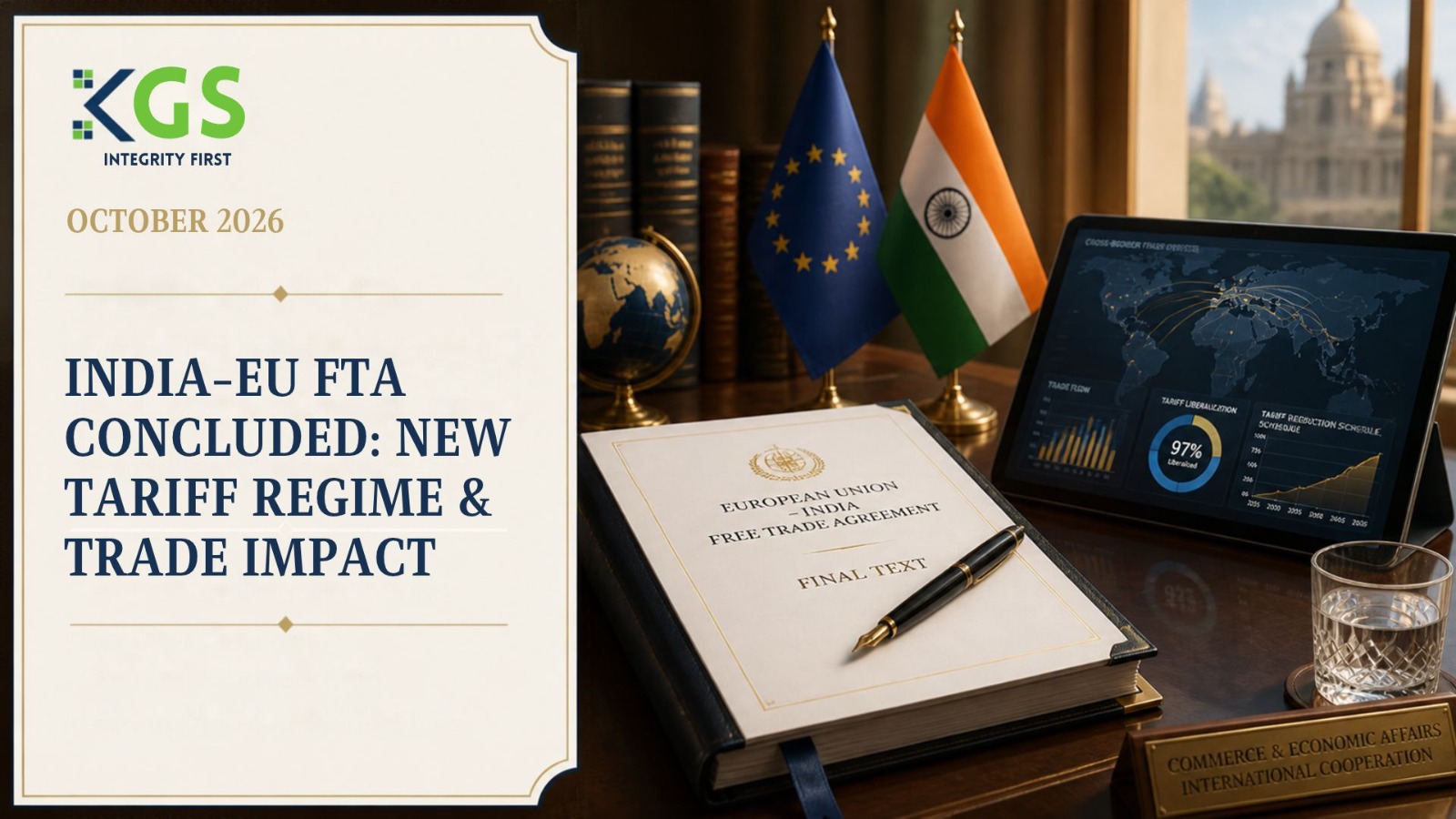
After nearly two decades of stop-start talks, India and the European Union concluded a free trade agreement on 27 January 2026. The pact is not yet signed, but it is likely to reshape which Indian industries grow over the next decade. Here is what it says, who wins, and what could go wrong.
Why this deal matters
Together, India and the EU account for roughly a quarter of global GDP and a third of world trade, and the agreement creates a free trade zone covering about 2 billion people. The EU has been India's largest goods trading partner since 2006, with bilateral goods trade of $136.5 billion in 2024–25.
The timing matters as much as the size. Talks started in 2007, stalled, and were relaunched in 2022. They sped up in 2025 as both sides looked for trading partners beyond any single market amid tariff tensions. The EU calls it the largest such deal either side has ever concluded, and India's trade minister expects it to be the fastest the EU has ever approved.
What is in the agreement
The EU moves first and furthest. It liberalises about 97% of its tariff lines for Indian goods, around 91% of them immediately. India, in turn, cuts or removes duties on about 96.6% of EU exports by value, though more gradually.
EU opens to India India opens to the EU
Coverage ~97% of tariff lines ~96.6% of EU exports by value
Industrial goods Zero duty on textiles, leather, footwear, gems, marine products Machinery (up to 44%), chemicals (up to 22%), pharma (11%) largely scrapped
Cars — Up to 110% falling towards 10% over 5–10 years, within a quota; cars under €15,000 excluded
Wine — Up to 150% falling to roughly 20–30% in stages
Farm goods No concessional tariffs on sugar, beef, poultry, meat Sensitive products protected
Services Binding access in 144 sub-sectors Access in 102 sub-sectors
These figures come from the EU Commission and press summaries of the concluded deal. The final legal text may change quotas and phase-in periods.
Where India benefits most
The biggest winners are labour-intensive exporters that currently pay the highest EU duties.
• Textiles and apparel: duties of up to 12% go to zero. A Treelife analysis puts India's manufacturing cost edge in key hubs at 15–20%, which could pull EU sourcing away from rivals.
• Leather and footwear: the 17% duty goes to zero.
• Gems and jewellery: duty-free access to the EU market.
• Marine products: duties of up to 26% go to zero, a big relief for seafood exporters.
• Chemicals, plastics and base metals: duties of 6.5% to 12.8% go to zero.
One analysis estimates that about $33 billion of Indian exports in labour-intensive sectors will see tariffs eliminated. Since these industries employ large numbers of people, the jobs story may matter more than the headline trade numbers.
Indian industry also gains as an importer. Cheaper European machinery and electrical equipment can help factories modernise, and lower duties on chemicals and pharmaceutical inputs cut costs. Consumers see change mainly in premium cars and wine.
Services and mobility
For India, services may be the quieter but bigger prize. The EU makes binding commitments in 144 services sub-sectors, while India opens 102. Public summaries name IT and IT-enabled services, digital services, professional services, education, business services and construction among the sectors where Indian providers gain certainty. The full sub-sector list will only be clear once the legal text is published.
The deal also eases movement for skilled professionals, with guaranteed access for independent professionals in 17 sub-sectors, including IT and R&D. The EU says India's financial-services commitments are the most ambitious it has given in any trade agreement.
What Europe gets in return
The EU expects its goods exports to India to double by 2032 and says the deal saves its exporters about €4 billion in tariffs. The main beneficiaries are carmakers, wine and spirits producers, and exporters of machinery, chemicals, pharmaceuticals, aircraft and medical equipment. EU–India trade already supports close to 800,000 European jobs. For Brussels, the deal is also about diversifying trade at a time when global trading rules are under strain.
The catches
• Carbon border tax (CBAM): it is not exempted. India reportedly gets a technical dialogue and a promise that any flexibility the EU gives other countries will extend to India, but exporters should assume reporting and payment duties still apply.
• Other EU rules: deforestation and supply-chain due diligence rules can add compliance cost that offsets tariff gains.
• Generic medicines: reports say the text has no provisions on generics or compulsory licensing, a key issue for India's pharma industry.
• Protected sectors: agriculture, steel and cheaper cars stay shielded, which limits gains in both directions.
• Ratification: the EU process is slower than India's, and earlier EU deals such as CETA and Mercosur have dragged on.
What happens next
Legal scrubbing is nearly done. On 30 October, European Council President Costa said Prime Minister Modi will travel to Brussels in December to sign, shortly before the European Council meeting that starts on 17 December. India's trade minister has said the pact could operate within four to five months of signing, which points to February–March 2027. India needs Union Cabinet approval and presidential ratification; the EU needs the Council and the European Parliament. Businesses should plan for tariff changes from roughly spring 2027, phased in over several years.
The Investment Protection Agreement and the Geographical Indications Agreement are still being negotiated separately.
Sources
• European Commission: EU and India conclude landmark FTA

Comments
No Comments yet